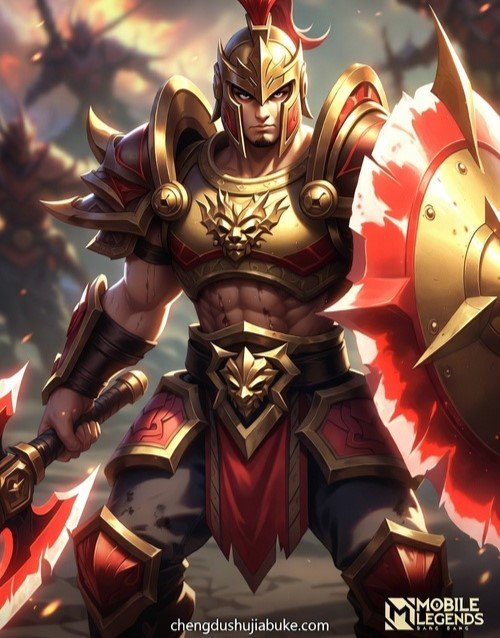
chengdushujiabuke.com – Competitive progression in Mobile Legends: Bang Bang is not just about mechanical improvement, but about learning how to adapt to constantly changing situations. Every ranked match presents different challenges depending on teammates, opponents, draft composition, and in-game momentum shifts. Because of this, players who rely only on mechanical skill often plateau, while those who understand strategy and adaptation continue climbing steadily.
One of the biggest differences between average players and high-ranked competitors is how they respond to pressure. Lower-ranked players tend to repeat the same decisions regardless of the situation, while advanced players adjust their behavior based on timing, map state, and enemy positioning. This flexibility is what allows consistent victory over time.
Another important aspect is understanding that Mobile Legends is not a game of constant aggression. Many matches are decided by patience, timing, and selective engagement. A single well-timed rotation or objective setup often has more impact than multiple kills gained through random fights.
As players progress, they begin to realize that every decision—no matter how small—affects the outcome of the game. From wave control to jungle timing, everything contributes to long-term success.
Adapting to Match Flow and Game Phases
Understanding how the game evolves from early to late stages is essential for making better decisions. Each phase has different priorities, and ignoring these transitions often leads to losing control of the match even with an early advantage.
The early game in Mobile Legends is where foundational momentum is created. However, many players misunderstand its purpose and treat it as a constant fighting phase. In reality, the early game is more about establishing lane stability and resource advantage rather than forcing kills.
Strong players focus on last-hitting minions, maintaining lane equilibrium, and avoiding unnecessary risks. They understand that dying early can slow down item progression and give opponents an advantage that becomes harder to recover from later.
Junglers during this phase must prioritize efficient clearing routes and timely rotations. A well-planned jungle path allows early turtle control and better map pressure. At the same time, roamers must carefully decide when to assist lanes and when to secure vision around key areas.
Small decisions in the early game often have long-term consequences. A single successful gank or stolen jungle camp can shift the entire tempo of the match. However, reckless aggression without proper vision usually results in wasted opportunities.
Consistency in early game behavior is what builds a stable foundation for mid-game transitions.
Mid Game Rotations and Objective Pressure
The mid game is where Mobile Legends becomes significantly more strategic. Towers begin falling, heroes rotate more frequently, and team fights become more organized. This is also the phase where most games are decided.
At this stage, players must shift their focus from laning to map control. Grouping for objectives like turtle or turret pushes becomes more important than isolated farming. Teams that rotate faster and more efficiently usually gain control of the map.
Vision denial becomes extremely important during the mid game. Controlling bushes, river entrances, and jungle choke points helps prevent ambushes and creates safer opportunities for objective fights.
Coordination plays a major role here. Even mechanically weaker teams can outperform stronger opponents if they rotate together and take fights with numerical or positional advantage. This is why communication becomes more valuable as the game progresses.
Mid game mistakes often include overextending alone, ignoring side lanes, or starting objectives without proper setup. These errors can easily lead to lost momentum and unnecessary deaths.
Late Game Decision Making and High-Stakes Execution
The late game is where one decision can decide the entire match. Every fight becomes critical because respawn timers are longer and objectives like Lord become game-ending threats.
At this stage, patience is far more important than aggression. Engaging without full team coordination often leads to instant loss. Strong players wait for the right moment, such as enemy mispositioning or cooldown disadvantages, before committing.
Positioning becomes extremely strict during late-game fights. Damage dealers must stay protected while tanks initiate safely. One misstep from a key player can instantly collapse an entire team fight.
Objective timing is also crucial. Securing Lord or defending against it requires precise coordination. Teams must decide whether to contest, trade, or defend based on map positioning and hero readiness.
Late-game success depends heavily on discipline. The ability to avoid panic decisions is what separates consistent winners from inconsistent players.
Psychological Control and Competitive Mindset
Beyond mechanics and strategy, mental strength plays a huge role in performance. Many players lose matches not because of skill differences, but because of poor emotional control and decision-making under pressure.
Competitive matches often create stressful situations, especially during losing streaks or high-stakes ranked games. Players who lose focus tend to make rushed decisions, leading to more mistakes and further frustration.
Strong players maintain focus by treating every situation as recoverable. Even when behind, they look for small advantages such as catching waves, defending towers, or securing vision.
Staying calm allows better decision-making during fights. Instead of panicking, experienced players evaluate cooldowns, positioning, and enemy mistakes before engaging.
Focus also includes avoiding distractions. Chat toxicity, emotional reactions, or blame games often reduce performance significantly. Players who ignore unnecessary noise usually perform more consistently.
Dealing With Team Variability and Unpredictability
One of the most challenging aspects of ranked gameplay is dealing with random teammates. Not every match will have perfect coordination, and expecting it leads to frustration.
Successful players adapt to their team’s behavior instead of trying to force unrealistic strategies. If teammates play aggressively, they support engagements. If teammates play passively, they focus on safe scaling.
Adaptability is more important than control. Trying to force teammates into perfect coordination often results in wasted opportunities. Instead, adjusting personal gameplay to match team rhythm is more effective.
Even in difficult matches, there are always ways to contribute. Clearing waves, defending structures, or providing vision can still impact the outcome even without perfect teamwork.
Building a Consistent Competitive Mindset
Long-term improvement requires consistency in mindset. Players who improve steadily treat every match as a learning opportunity rather than just a win-or-lose scenario.
Instead of focusing on blame, strong players analyze what could have been done differently. This includes positioning mistakes, missed rotations, or poor timing decisions.
A consistent mindset also involves patience. Progress in ranked gameplay is rarely linear. Some days will feel easier than others, but long-term improvement comes from steady practice and reflection.
Confidence is also important, but it must be balanced. Overconfidence leads to reckless plays, while lack of confidence leads to hesitation. The goal is controlled confidence based on experience and understanding.
Improving in Mobile Legends requires more than short-term focus. Players who aim for long-term success must develop habits that support consistent growth over time.
Learning From Replays and Mistakes
One of the most effective ways to improve is reviewing past gameplay. Watching replays helps identify positioning errors, missed opportunities, and poor decision-making patterns.
Many players repeat the same mistakes without realizing it. Reviewing gameplay helps break this cycle by highlighting areas that need improvement.
Instead of focusing only on kills or highlights, players should analyze macro decisions such as rotations, objective timing, and map awareness. These are often the most impactful elements of the game.
Over time, consistent self-review leads to better instincts and faster decision-making during real matches.
Expanding Hero Pool and Flexibility
Players who rely on only one or two heroes often struggle when those heroes are banned or countered. Expanding hero pool allows greater adaptability during draft phases.
Flexibility also improves team contribution. Being able to fill different roles increases chances of balanced team composition and better synergy.
Learning multiple heroes also improves game understanding. Each role teaches different aspects of gameplay such as positioning, timing, and map awareness.
A flexible player becomes more valuable in team coordination because they can adjust based on team needs instead of forcing a specific playstyle.
Building Long-Term Ranked Consistency
Consistency is the ultimate goal for competitive players. Winning a few matches is not as important as maintaining stable performance over time.
Consistency comes from discipline, not randomness. It involves making smart decisions repeatedly, avoiding unnecessary risks, and staying mentally stable throughout ranked sessions.
Players who achieve consistency often climb ranks naturally without forcing results. Their gameplay becomes stable, predictable in execution, and reliable in team environments.
Over time, this consistency transforms average players into highly dependable competitors.
Conclusion Climbing Ranks Through Smart Adaptation in Mobile Legends: Bang Bang
Mobile Legends: Bang Bang is a game that rewards intelligence, adaptability, and discipline as much as mechanical skill. Every stage of the match—from early laning to late-game fights—requires different thinking and decision-making approaches.
Players who learn to adapt to game phases, manage psychological pressure, and improve strategic awareness will consistently outperform those who rely only on aggression. Understanding timing, positioning, and teamwork creates a strong foundation for long-term success.
Ultimately, climbing ranks is not about playing perfectly every match, but about making better decisions over time. With patience, reflection, and adaptability, any player can steadily improve and achieve higher competitive levels in Mobile Legends.