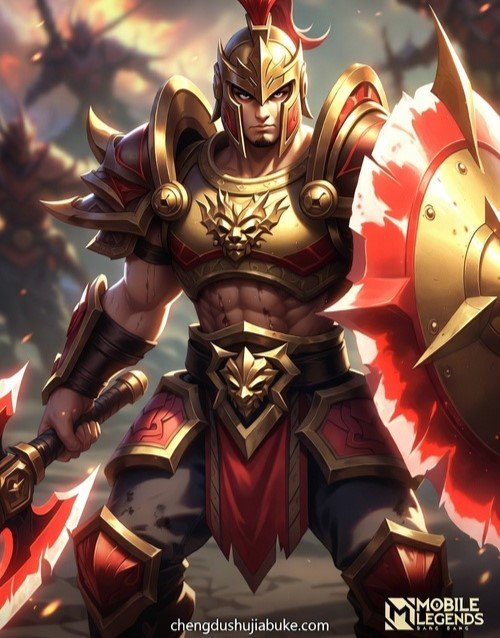
chengdushujiabuke.com – Mobile Legends: Bang Bang is more than just a fast-paced mobile MOBA; it is a layered competitive experience where decision-making, mechanics, and teamwork intersect every second of the match. Many players focus only on hero mechanics, but true consistency in ranked games comes from understanding macro strategy, map pressure, role synergy, and timing. This guide breaks down the essential foundations and advanced concepts that separate average players from high-ranking competitors. Instead of memorizing isolated tips, the focus here is on understanding how the entire game flows, how roles interact with each other, and how every decision contributes to victory. Whether you are a beginner trying to stabilize your win rate or an experienced player aiming for Mythic glory, the following breakdown will help you refine your approach to the game in a more structured and strategic way.
Core Gameplay Understanding and Map Awareness in Mobile Legends
Understanding the core mechanics of Mobile Legends begins with recognizing that every action on the map is interconnected. Unlike many casual mobile games, success is not determined solely by individual kills but by how efficiently a team controls space, resources, and time. Map awareness is the invisible skill that dictates whether you are playing reactively or proactively. When players begin to see the map not as isolated lanes but as a dynamic system of pressure points, their performance improves dramatically. This section explores how laning, jungle control, and rotations create the foundation for every winning strategy.
Laning Fundamentals and Early Game Stability
The laning phase is where most matches are quietly decided, even if players do not realize it at first. Each lane—EXP, Gold, and Mid—has a specific function that contributes to overall team balance. In the EXP lane, fighters or durable heroes focus on sustaining themselves while scaling into mid-game dominance. In the Gold lane, marksmen prioritize farming efficiently because their item dependency is critical for late-game damage output. The Mid lane, usually occupied by mages, acts as the central hub for rotation and early skirmishes.
What many players overlook is that laning is not just about last-hitting minions or trading damage. It is about wave control and pressure manipulation. Proper wave management allows a player to force enemies into uncomfortable positions, making them vulnerable to ganks or losing experience. Smart laners also track enemy jungle movements indirectly by observing missing opponents and adjusting their aggression accordingly. Even a small decision, such as freezing a lane or pushing it at the right moment, can determine whether your team secures the first turtle or loses early momentum. Laning stability is essentially about patience, timing, and awareness of how your lane contributes to the bigger map picture.
Jungle Control and Resource Domination
The jungle in Mobile Legends is not just a farming zone for assassins; it is the economic engine of the entire team. Buff control, creep timing, and jungle invasion strategies all shape the pace of the game. A team that controls the jungle effectively controls the tempo. Red and blue buffs are not just stat enhancements—they define how early fights will unfold. A marksman with red buff gains sustained damage advantage, while a mage or assassin with blue buff gains the ability to spam skills and control fights more frequently.
Jungle control also involves denying enemy resources. Invading at the right time can delay enemy core heroes significantly, forcing them to fall behind in level and gold. However, reckless invasion without map awareness can backfire, leading to unnecessary deaths and loss of objectives. Good players constantly track the enemy jungler’s position, estimating their next move based on spawn timers and visible map activity. The best teams synchronize lane pressure with jungle invasions, ensuring that when they invade, they have priority from nearby lanes. This coordination transforms jungle control from a solo responsibility into a team-wide strategic weapon.
Rotations, Timing, and Map Vision
Rotations are the heartbeat of high-level gameplay. A rotation is not simply moving from one lane to another; it is about moving with purpose, ensuring that every movement creates pressure or support somewhere on the map. Effective rotations depend heavily on wave states. If a lane is pushed in your favor, it creates freedom to rotate without losing resources. Conversely, poor wave management traps players in lanes, limiting their ability to influence other areas.
Timing is equally important. Rotating too early can waste potential gold and experience, while rotating too late can result in lost fights or objectives. High-level players constantly evaluate whether a rotation will result in a net gain for the team. Vision also plays a critical role in rotations. Since Mobile Legends has limited vision mechanics compared to PC MOBAs, predicting enemy movement becomes essential. Players rely on minimap awareness, missing hero indicators, and behavioral patterns to anticipate threats. Mastering rotations means learning how to be present at the right place, at the right time, without sacrificing your own growth.
Hero Roles and Team Composition Strategy in Mobile Legends
Team composition is one of the most decisive factors in any match. Even mechanically skilled players struggle when their team lacks synergy or proper role balance. Understanding how each role contributes to the team’s win condition allows players to make smarter picks and adapt their gameplay accordingly. Instead of thinking of heroes as individual characters, it is more effective to view them as components of a larger system where each role supports a specific function in both early and late game scenarios.
Tank and fighter heroes serve as the backbone of any team composition. Their primary responsibility is to absorb damage, initiate fights, and create space for damage dealers to operate safely. Tanks such as Atlas or Khufra excel at initiating team fights with crowd control abilities that disrupt enemy positioning. Fighters, on the other hand, often balance durability with damage output, allowing them to function both as frontline defenders and secondary damage sources.
What separates average tank players from high-impact ones is decision-making during engagements. Initiating at the wrong moment can lead to disastrous team wipes, while perfectly timed initiation can instantly secure victory in a fight. Tanks must constantly evaluate enemy cooldowns, positioning, and ally readiness before committing. Fighters, meanwhile, often act as flexible pressure agents in side lanes or mid-game skirmishes. Their role is to create chaos in enemy formations while still being durable enough to survive extended fights. In coordinated play, tanks and fighters work together to establish control zones where enemies are forced into unfavorable positions.
Mage and Marksman Roles: Damage Scaling and Positioning
Mages and marksmen represent the primary damage sources in Mobile Legends, and their effectiveness depends heavily on positioning and timing. Mages typically dominate the early to mid-game with burst damage and area control abilities. They influence rotations, skirmishes, and objective fights through their ability to deal significant damage in short bursts. Marksmen, on the other hand, scale into the late game as consistent damage dealers capable of shredding tanks and objectives alike.
The challenge for these roles lies in survivability. Unlike tanks or fighters, mages and marksmen are highly vulnerable to assassins and crowd control. As a result, positioning becomes their most important skill. Staying at the edge of fights, maintaining vision awareness, and understanding enemy threat ranges are essential. A well-positioned marksman can turn an entire team fight, while a poorly positioned one can be eliminated instantly. Successful players in these roles also learn patience, waiting for key enemy abilities to be used before committing to full damage output.
Assassin and Support Synergy: Map Pressure and Utility Control
Assassins and supports often operate behind the scenes, but their influence on the game is immense. Assassins focus on eliminating high-value targets such as mages and marksmen. Their gameplay revolves around timing, patience, and precision. Instead of engaging first, they wait for the right moment to strike, often entering fights from unexpected angles. Map awareness is critical for assassins, as they rely on vision gaps and enemy positioning mistakes.
Supports, meanwhile, provide utility, healing, shielding, or crowd control depending on their kit. They act as enablers, ensuring that core damage dealers survive and thrive during fights. The synergy between assassins and supports is subtle but powerful. While assassins disrupt enemy backlines, supports stabilize their own team’s frontline and damage dealers. Together, they create balance between aggression and sustainability. A team with strong assassin-support synergy can control fights by removing threats quickly while sustaining pressure through utility-based survival.
Once the fundamentals and role understanding are mastered, the next step is learning how to consistently convert advantages into victories. Competitive gameplay is not just about mechanics or team fights; it is about macro-level decision-making, objective control, and mental resilience. High-ranked players distinguish themselves through their ability to read the game several steps ahead and adapt dynamically to changing conditions.
Macro Decision Making and Game Flow Control
Macro decision-making refers to the ability to understand the overall state of the game and choose actions that maximize long-term advantage. Instead of focusing solely on kills, macro players evaluate gold differences, map pressure, objective timers, and enemy positioning. A single decision, such as choosing to push a lane instead of chasing a kill, can determine the outcome of the match.
Understanding game flow is essential. Early game focuses on farming and minor skirmishes, mid-game revolves around objective control and rotations, while late game becomes a high-risk environment where one mistake can end the match. Macro players adapt their strategy based on these phases. They know when to slow the game down, when to accelerate pressure, and when to force engagements. This level of awareness transforms gameplay from reactive to predictive.
Objective Control: Towers, Turtle, and Lord Pressure
Objectives are the true win conditions in Mobile Legends. Kills provide temporary advantage, but objectives create permanent map control. Towers open the map, Turtle provides early economic advantage, and Lord creates late-game pressure that forces enemies into defensive positions. Successful teams prioritize objectives over unnecessary fights.
Timing is crucial when contesting objectives. Entering a fight without vision or cooldown advantage often leads to disaster. Smart teams prepare for objectives by establishing lane priority first, ensuring that enemies are forced to defend multiple points at once. This spreads enemy resources thin and increases the chance of successful objective capture. Lord control in particular becomes a decisive factor in late-game scenarios, as it allows teams to apply pressure across multiple lanes simultaneously.
Mental Game, Adaptation, and Ranked Consistency
The mental aspect of Mobile Legends is often underestimated but plays a huge role in ranked consistency. Players who tilt easily or fail to adapt often lose games that are otherwise winnable. Adaptation means adjusting your playstyle based on team composition, enemy strength, and match progression. Sometimes the correct decision is to play aggressively, while other times it is better to focus on defense and scaling.
Consistency comes from emotional control and strategic discipline. Instead of reacting impulsively to setbacks, high-level players reset their mindset and focus on the next objective. They understand that not every match can be dominated, but every match can be influenced. Maintaining composure allows better decision-making, clearer communication, and improved performance under pressure.
Conclusion Mobile Legends: Bang Bang Mastery Guide – Strategy, Roles, and Winning Mechanics for Consistent Ranked Success
Mastering Mobile Legends: Bang Bang requires more than mechanical skill; it demands a deep understanding of map awareness, role synergy, and strategic execution. From laning fundamentals and jungle control to advanced macro decision-making and objective prioritization, every layer of gameplay contributes to long-term success. Players who learn to think beyond individual fights and focus on overall game flow consistently outperform those who rely solely on mechanics. By combining role mastery with strategic awareness and mental discipline, any player can steadily climb the ranked ladder and develop a more complete understanding of the game’s competitive depth.